
Amrum Review
Amrum is a slow film that explores the complexities of wartime life in Germany for everyday Germans far removed from the most famous atrocities, and the degrees of guilt and innocence in this far removed community of complicity.
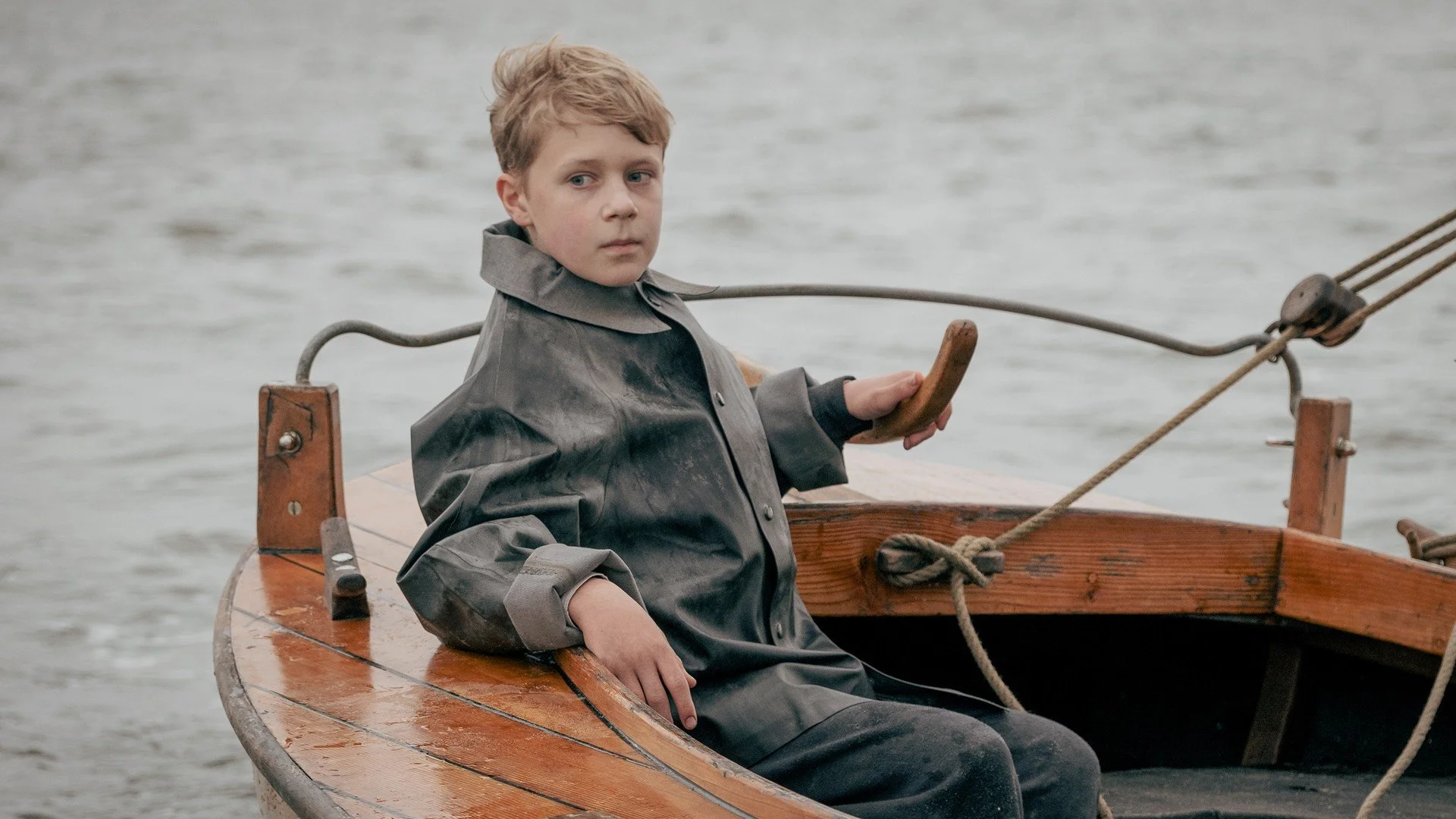
Directed by Fatih Akin, whose usual work is a lot more provocative than this, Amrum was actually written by another famed German director - Hark Bohm. Based on his own childhood, the film chronicles a fairytale-like quest from a young German boy Nanning (Jasper Billerbeck), who is living in the whaling community of Amrum during the last days of WWII, as a transplant from the mainland for safety reasons with his mother, siblings and aunt. As the Third Reich falls, and his mother becomes almost comatose in her grief, he goes on a quest to find white bread, butter and honey to cheer her up.
Bohm fell ill before he could complete the film, so asked his friend Akin to step in and direct. And what we get is a film that alludes, more than interrogates, the complexities, nuances and controversies that are so clearly on display here.
We’re talking about a child growing up all too quickly. About learning his parents are maybe not the good guys in this situation. About suicide and death, Nazi retribution and the crumbling days of a villainous empire. But this film is happy to let those moments slide by as window dressing. Akin, unusually, seems reticence to really dig into any of it.
Instead, this plays as a piece more focussed on the journey of this young boy. Some moments hit - like the eventual success Nanning finds, the moments of him wading with the bike through the water, or the elements of him listening to the radio or skinning a rabbit. But many others don’t; in particular his unrelenting devotion to his mother, and a pseudo-relationship with two refugees who farewell him as he leaves the island.
Throughout it all, Akin builds a suite of sweeping inserts and interstitials that showcase intriguing life on the island; from smoked fish swinging in the breeze to big wide drone shots. The island is undeniably beautiful, but some of the work here feels redundant. And through it all, a few famous faces appear - Diane Kruger and Matthias Schweighöfer, who both appear in remarkably brief performances.
Overall, Amrum is an intriguing moment in time to take a look at, and the central quest is a workable one that provides a strong structure. But the realisation of this story never really feels compelling or revelatory. With a flatline of an emotional buildup, and an ending that feels somewhat unearned, Amrum ultimately fizzles.
